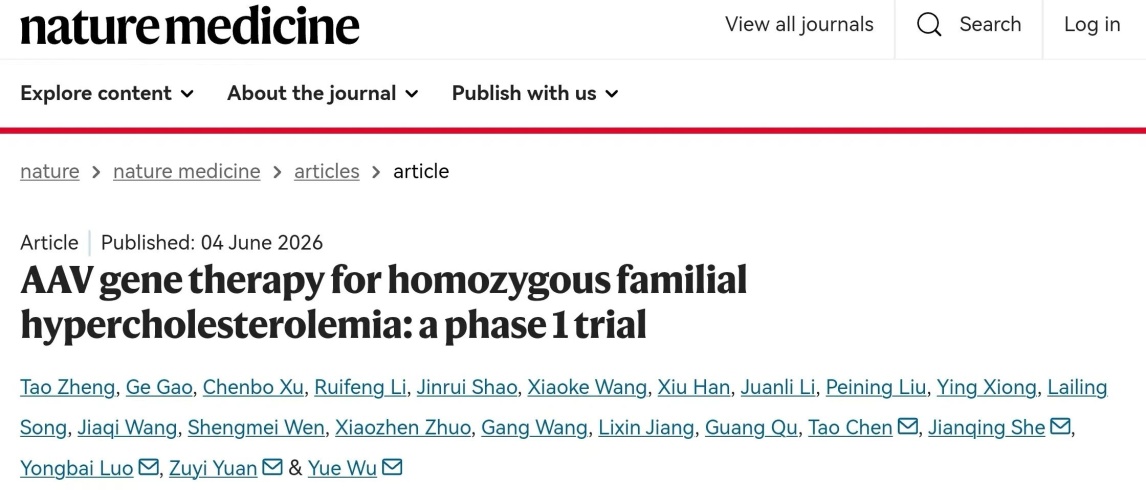
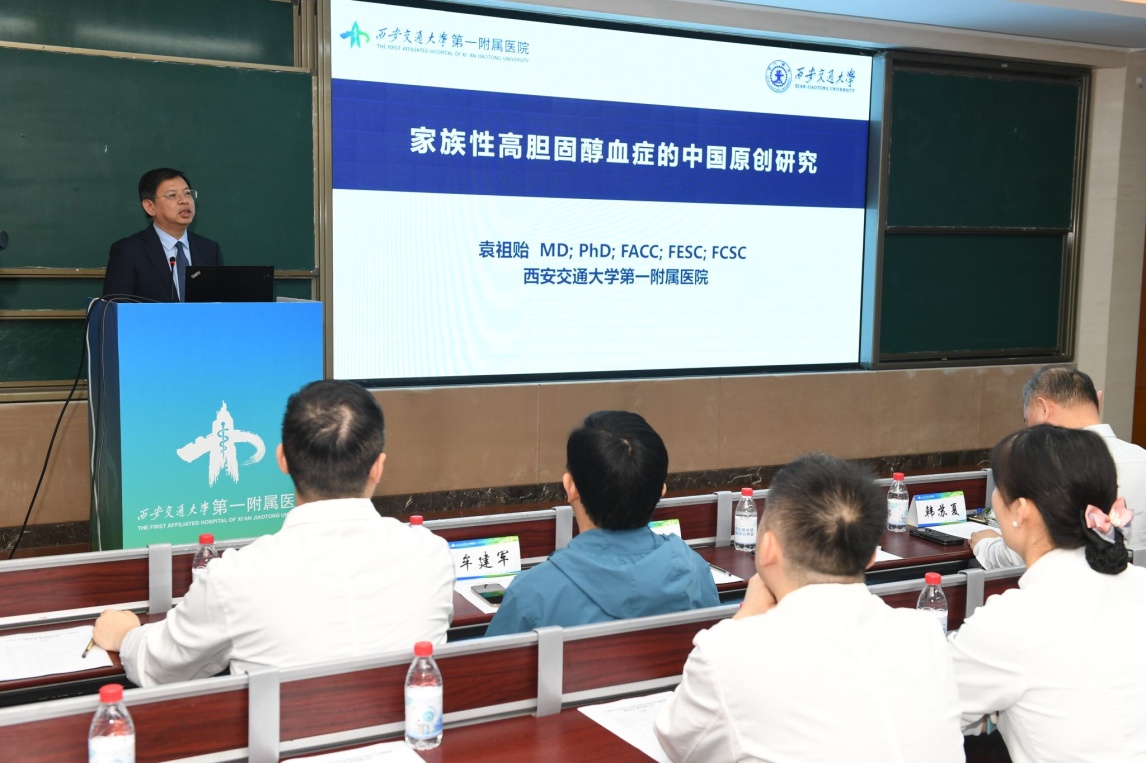
On June 10, the team led by Professor Yuan Zuyi from the First Affiliated Hospital (FAH) of Xi’an Jiaotong University (XJTU), in collaboration with Suzhou NGGT Biotechnology, announced a major clinical breakthrough in the world’s first gene therapy for homozygous familial hypercholesterolemia (HoFH). The findings were published in the leading international journal Nature Medicine, marking China’s entry into the international forefront of gene therapy for rare inherited cardiovascular diseases.
Homozygous familial hypercholesterolemia is a life-threatening inherited metabolic disease. Genetic defects prevent the liver from properly clearing low-density lipoprotein cholesterol (LDL-C), causing patients’ LDL-C levels to reach four to nine times those of healthy individuals. Most patients are prone to severe cardiovascular events or even sudden death before the age of 35. Conventional lipid-lowering drugs have limited efficacy, while liver transplantation faces challenges such as a shortage of donor livers, high surgical risks, and the need for lifelong postoperative immunosuppressive therapy. As a result, no curative treatment has long been available worldwide.
NGGT006, jointly developed in this study, is an innovative gene therapy drug using recombinant adeno-associated virus serotype 8 (AAV8) as the vector. Through a single intravenous infusion, the drug delivers a functional low-density lipoprotein receptor gene into patients’ hepatocytes, restoring lipid metabolism at its source. The team incorporated technologies such as a hepatotropic vector, a liver-specific promoter, and codon optimization to balance efficacy and safety.
This phase 1 clinical trial adopted a dose-escalation design and enrolled three patients with relevant gene mutations. The efficacy data showed marked differences among dose groups: the low-dose group showed no significant lipid-lowering effect; the medium-dose group achieved a maximum lipid reduction of 33.29%, but the effect gradually declined after 32 weeks; the high-dose group showed remarkable efficacy. In the high-dose patient, LDL-C decreased from 11.17 mmol/L before treatment to 0.26 mmol/L after treatment, representing a reduction of more than 96%. Total cholesterol and lipoprotein(a) levels also decreased substantially. By week 2 after administration, LDL-C had fallen by more than 50%; from week 6 onward, the reduction remained above 90%. By the end of the 52-week follow-up, lipid levels remained stable, and the patient had discontinued all lipid-lowering medications.
Preclinical animal studies showed that the drug reduced blood lipid levels by 58% to 90% in experimental animals, with efficacy maintained for 36 weeks, and also reduced atherosclerotic plaques. Toxicology studies in rhesus monkeys showed only transient fluctuations in transaminases and no severe toxicity. In the human trial, all patients tolerated the treatment well, with only mild and reversible adverse reactions and no serious safety events.
Compared with conventional therapies, NGGT006 offers three major advantages: single-dose administration, long-term lipid control, and treatment targeting the underlying cause of the disease. It overcomes the limitations of existing therapies. This is also the world’s first HoFH gene therapy study to fully publish both preclinical and human trial data, filling a technological gap in the field.
At present, the team will continue to conduct multicenter clinical trials with larger sample sizes, extend follow-up duration, optimize dosing regimens and immune management, and promote the early clinical application of the drug to benefit patients with rare diseases.