Recently, Professor He Yingli’s team from the the First Affiliated Hospital (FAH) of Xi’an Jiaotong University (XJTU) published an important research achievement in the field of severe liver disease in the international journal BMC Infectious Diseases. Over a period of nine years, the team conducted a clinical study involving 835 patients with acute-on-chronic liver failure (ACLF), identified the core high-risk factors and disease-stage-specific patterns of ACLF complicated by invasive pulmonary aspergillosis (IPA), and developed a high-performance prediction model, providing key support for precise clinical intervention.
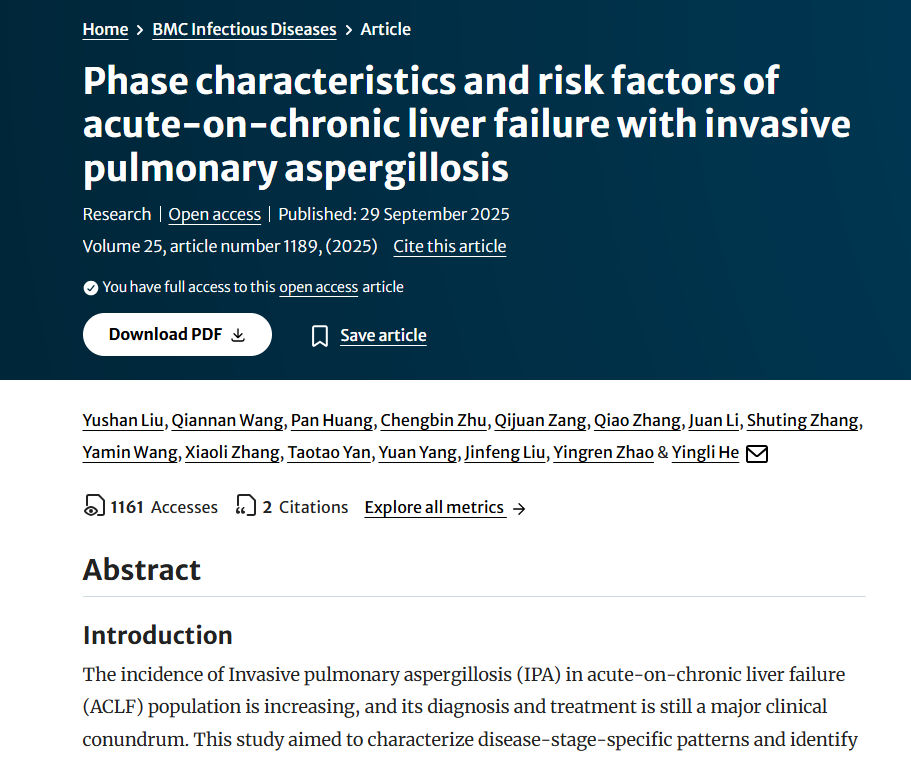
ACLF is a critical clinical condition characterized by severe immune dysfunction, making patients prone to fatal opportunistic infections. Among them, IPA has a mortality rate as high as 80%. Due to atypical symptoms and diagnostic difficulties, it has long been a major challenge in the treatment of liver disease. Previous studies in this area were limited by small sample sizes and a lack of systematic analysis of temporal patterns, which could easily lead to missed diagnosis and delayed treatment.
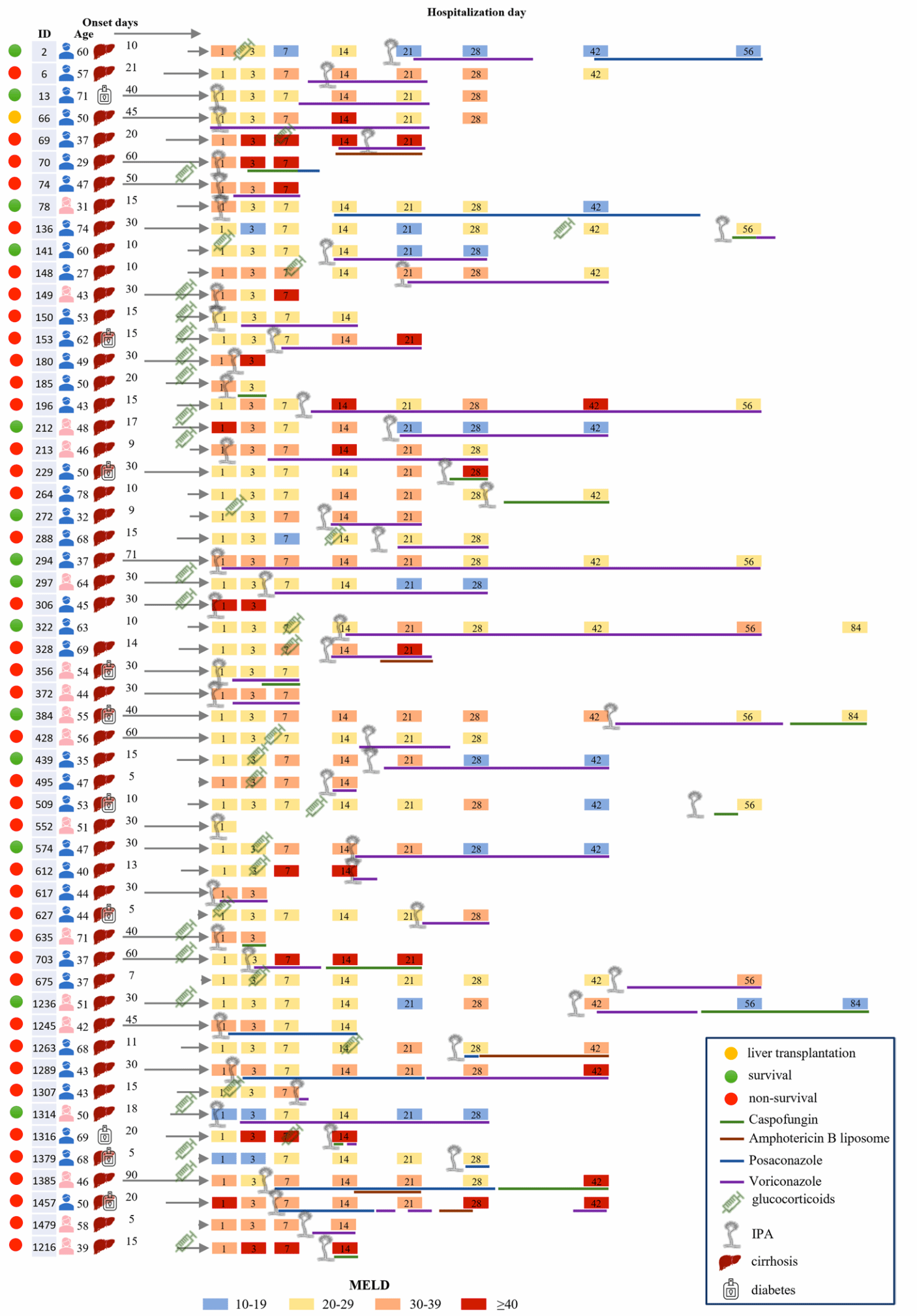
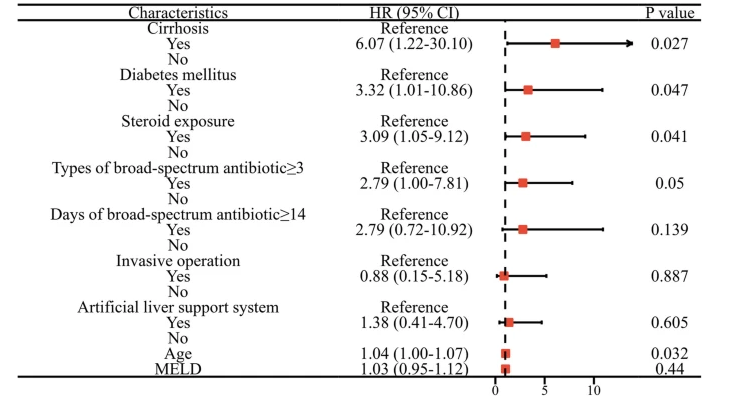
This large-sample retrospective cohort study revealed two major patterns. First, the onset of IPA was concentrated in the later stage of the disease course: 63.6% of cases occurred more than 28 days after ACLF diagnosis, only 5.5% occurred within 14 days, the median time to onset was 31 days, and days 14 to 42 represented a high-risk window. Second, the study identified five independent high-risk factors: liver cirrhosis, diabetes mellitus, glucocorticoid exposure, increasing age, and the combined use of three or more broad-spectrum antibiotics.
Based on these factors, the team developed the original C-Aged prediction model, which can rapidly calculate risk scores using easily accessible information such as underlying diseases, medication history, and age. Validation showed that the model achieved an area under the curve of 0.828, indicating excellent discriminatory performance. It can help clinicians quickly identify high-risk patients and implement targeted monitoring and intervention.
This study provides evidence-based support for the precise prevention and treatment of fungal infections in patients with severe liver disease. It may effectively reduce missed diagnosis and mortality rates, and promote the improvement of diagnosis and treatment standards for severe liver disease in China.