On the afternoon of February 7, 2026, the Northwest Academic Exchange Meeting and Research Kickoff for the “Stroke Disability Reduction: Brain-Heart Health Action Plan”, jointly hosted by the Chinese Association of Geriatric Medicine and the First Affiliated Hospital (FAH) of Xi’an Jiaotong University (XJTU), was held in International Land Port Division of FAH. Experts, scholars, and clinicians in the field of neurology from more than 50 stroke centers nationwide attended the meeting. The conference focused on frontier progress in stroke prevention and treatment and officially launched the Bridge-PUK Extend multicenter, randomized, double-blind, controlled clinical study.

The meeting opened with remarks by Professor Han Jianfeng. He noted that stroke clinical research in China has been steadily moving onto the international stage and that the Bridge-PUK Extend study may help address the gap in reperfusion therapy beyond the conventional time window. Academician Ji Xunming delivered remarks online, analyzing the challenges and opportunities in stroke prevention and treatment in China. He underscored the importance of high-quality clinical research and its translation into practice, and called for strict adherence to research integrity to ensure that study data are truthful and reliable.

During the protocol exchange session, Professor Song Haiqing of Xuanwu Hospital outlined the latest advances in intravenous thrombolysis for ischemic stroke. Professor Liu Fude of the FAH of XJTU then gave a detailed presentation of the Bridge-PUK Extend study design. The study aims to evaluate the efficacy and safety of pre-treatment with recombinant human prourokinase, drawing broad attention. The launch ceremony for the study followed, marking that the frontier exploration of endovascular therapy for stroke has entered a substantive stage in Northwestern China.
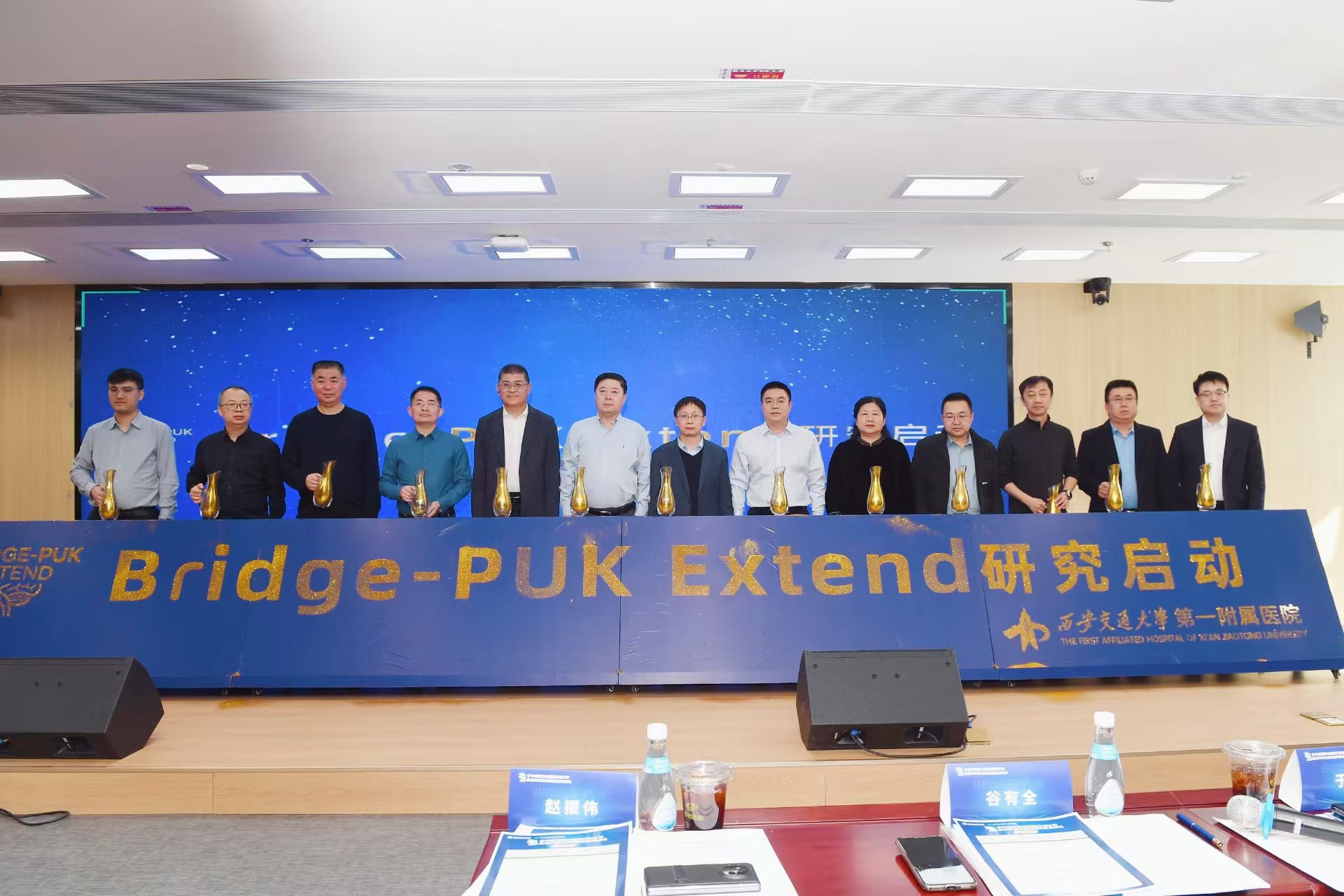
After the launch ceremony, Dr. Cheng Yawen presented the study protocol, followed by discussions on study details among multiple experts and investigators from participating sub-centers. Dr. Li Mengmeng delivered focused training on key stroke assessment scales and, after an assessment, issued certificates of qualification to investigator representatives. The meeting also included clinical practice training and case discussion sessions. Several professors shared complex clinical cases and provided commentary, promoting the integration of theory and practice.
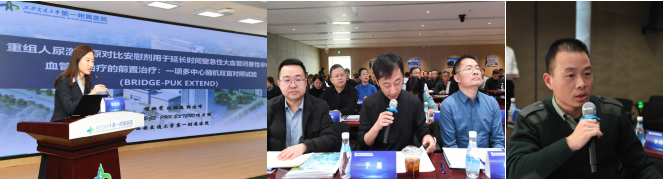
Finally, Professor Yu Jia delivered concluding remarks, noting that the meeting helped build consensus for research collaboration. Through multiple formats, the meeting created a platform for exchange and clarified directions for cooperation, carrying positive significance for enhancing comprehensive stroke prevention and treatment capacity in Northwestern China and for advancing the “Healthy China 2030” Planning Outline and the national Million Disability Reduction Initiative.