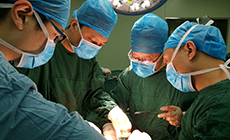
On December 1, 2025, the Department of Cardiovascular Medicine of the First Affiliated Hospital (FAH) of Xi’an Jiaotong University (XJTU) successfully performed Shaanxi Province’s first percutaneous ultrasound renal sympathetic denervation (uRDN) procedure in 2025, providing minimally invasive and precise treatment for a patient with resistant hypertension and marking the introduction of another state-of-the-art international technology in the FAH’s field of interventional hypertension.

The patient had a long history of hypertension. Despite combination therapy with multiple potent antihypertensive agents, 24-hour ambulatory blood pressure remained in the high-risk range of 150-170/100-115 mmHg, representing typical resistant hypertension. Having developed tolerance to long-standing hypertension, the patient remained largely asymptomatic, yet faced a markedly increased risk of cardio-cerebrovascular events such as stroke and myocardial infarction. After comprehensive evaluation, although the renal artery anatomy was challenging, the patient met the inclusion criteria for the uRDN clinical study.
The procedure was overall planned and coordinated by Professor Yuan Zuyi, President of the Cardiovascular Hospital, under the guidance of Professor Tian Gang, Director of the Hypertension Subspecialty. Professor Han Ke, from the interventional cardiology team, served as the primary operator, with Professors Li Ting and Ma Yunlong and others working collaboratively to complete the procedure. Drawing on their extensive interventional experience, the team successfully advanced the ultrasound ablation catheter to the target segment of the renal artery and, by leveraging the penetration and homogeneous ablation advantages of ultrasound energy, overcame the limitation of traditional radiofrequency ablation that requires close contact with the vessel wall, achieving precise circumferential ablation of the sympathetic nerve plexus in the adventitia of the renal artery. The entire procedure lasted approximately 60 minutes, during which the patient’s vital signs remained stable.

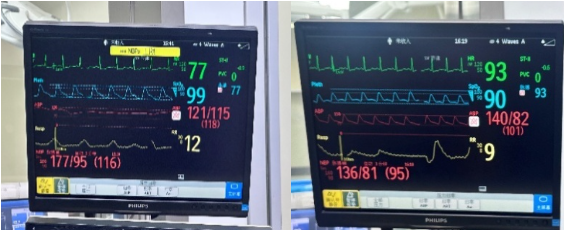
The postoperative therapeutic effect was immediate: The patient’s blood pressure decreased from 177/95 mmHg preoperatively to 136/81 mmHg postoperatively, with a reduction of 41/14 mmHg, significantly reducing the lifelong burden of antihypertensive medication and the risk of long-term complications.
As a cutting-edge interventional therapy for hypertension worldwide, uRDN offers advantages such as non-contact energy delivery and uniform, complete ablation, with superior safety and procedural stability. The success of this procedure represents another major breakthrough in the FAH’s diversified development of interventional therapies for hypertension following the introduction of multiple catheter-based RDN technologies such as Symplicity Spyral, and highlights the department’s strong capability to lead regional technological innovation.