ABOUT NOSES
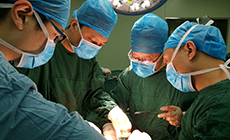
Natural Orifice Specimen Extraction Surgery (NOSES) is an advanced minimally invasive surgical technique that enables removal of resected specimens through natural orifices, avoiding the need for an abdominal extraction incision. This approach aims to reduce surgical trauma, postoperative pain, wound complications, and improve cosmetic and functional outcomes while maintaining oncological safety and rigor.
NOSES techniques have been developed across multiple surgical disciplines, including colorectal, gastric, gynaecologic, and urologic surgery.


However, the NOSES procedure is complex, technically demanding, involves numerous detailed steps, and requires strict adherence to aseptic and tumor-free operating protocols. Surgical execution demands precision and uniformity, necessitating “systematic” training. Structured training thus becomes paramount, enabling systematic theoretical knowledge review and step-by-step standardized practice for trainees.
Hosted by the International NOSES Alliance and the China NOSES Alliance, and organized by the Shaanxi Branch of the China NOSES Alliance and Xi'an Jiaotong University First Affiliated Hospital—leveraging the National Medical Center and the National Clinical Skills Experimental Teaching Center—this initiative integrates premium medical education resources to launch the International NOSES Structured Training and Certification Program. This course aims to disseminate scientifically standardized minimally invasive NOSES techniques for gastrointestinal tumor diagnosis and treatment through systematic training, providing technical assurance for improving patient outcomes—particularly for colorectal cancer patients. Relevant details are hereby announced as follows:
1.Training Objectives
Through standardized procedures, quality control, and faculty development, participants will progress from awareness to operation, proficiency, and mastery. This will advance the global adoption of NOSES surgical techniques across medical centers; establish a cross-regional academic platform to promote clinical application of NOSES technology; and create a globally coordinated teaching and evaluation system to cultivate specialists in minimally invasive diagnosis and treatment of gastrointestinal tumors, particularly colorectal cancers.
2.Target Audience
Global gastrointestinal surgical professionals and healthcare administrators, with a particular focus on colorectal surgeons. The training centers on promoting NOSES surgical techniques to enhance minimally invasive gastrointestinal tumor diagnosis and treatment standards, while advancing surgical standardization and homogeneity.
3. Curriculum Framework (International NOSES Alliance Certified)
International NOSES Structured Training & Certification Program [International NOSES (Natural Orifice Specimen Extraction Surgery) Structured Training & Certification Program, INSTEP] (Requires presentation of domestic medical license)
Training Arrangements:
Duration: 7 days
Format: Small-group instruction (≤20 participants per class), 1:6 instructor-to-student ratio, 1:4 teaching model-to-trainee ratio
Training Date | Training Schedule | Training Content | Location |
2026.03.28 | All day | Register | Xi'an Oriental Hotel |
2026.03.29 | 8:00-11:30 | Opening Ceremony | Conference Room, 8th Floor, Surgical Building |
2026.03.30 | 09:00-09:50 | Why we do NOSES ?! Quality control of NOSES surgery (Wang Xishan, Sun Xuejun) | Conference Room, 8th Floor, Surgical Building |
10:00-10:50 | Clinical research progress of NOSES surgery Robot NOSES surgery (Ding Kefeng, Li Taiyuan) |
11:00-11:50 | Surgical technique for ultra-low rectal cancer NOSES surgical technique for Left hemicolectomy (She Junjun, Liu Zheng,) |
15:00-15:50 | Daytime NOSES surgery Structured training for NOSES surgery (Zhou Haitao, Yu Shaojun) |
16:00-16:50 | The status of NOSES surgery in China The methods that place and fix the anvil of the circular stapler into the proximal colon segment in NOSES surgery. (Guan Xu Zheng Jianbao) |
17:00-17:50 | NOSES surgery for rectal cancer Membrane anatomy theory in colorectal surgery (Qiao Qing, Qiu Jian) |
19:00-20:00 | Cultural Visit |
2026.03.31 | 09:00-09:50 | Low anterior resection with anal sphincter preservation for rectal cancer NOSES technique for sigmoid colon cancer (Zheng Jianyong, Wu Tao) | Conference Room, 8th Floor, Surgical Building |
10:00-10:50 | Application of TaTME in rectal cancer Gastric Cancer NOSES Technique (Shi Hai, Liu Ruiting) |
11:00-11:50 | NOSES surgical technique for right hemicolectomy Intracavitary anastomosis for NOSES surgery (Zhao Wei, Wang Guanghui) |
15:00-17:30 | Skills Training (Zheng Jianbao, Yang Kui, Jiang Zhengdong, Yu Junhui, Sun Qi, Shi Feiyu, Tong Yingmu, Hu Chenhao) | Clinical Skills Center (10th Floor, Education Building) |
19:00-20:00 | Cultural Visit |
|
2026.04.01 | 09:00-12:00 | Surgical Demonstration 1 (She Junjun, Shi Feiyu) | Operating Room, Surgery Building |
09:00-12:00 | Surgical Demonstration 2 (Sun Xuejun, Yu Junhui) |
13:00-16:00 | Surgical Demonstration 3 (Zhao Wei, Sun Qi) |
13:00-16:00 | Surgical Demonstration 4 (Zheng Jianbao, Zheng Zhongqiang) |
19:00-20:00 | Cultural Visit |
2026.04.02 | 09:00-12:00 | Surgical Observation (Wang Xishan, Zheng Jianbao) | Operating Room, Surgery Building |
13:00-16:00 | Final Assessment (Theory + Skills) | Surgical Building 8th Floor Conference Room, Clinical Skills Center (10th Floor, Education Building) |
19:00-20:00 | Cultural Visit |
|
2026.04.03 | 09:00-10:00 | Graduation Ceremony | Conference Room, 8th Floor, Surgical Building |
Fee: CNY 3,000 per person (includes clinical skills training fee and certification fee)
Note: The above course content and faculty arrangements are subject to change. The final schedule will be confirmed in the pre-course notification.
4.Faculty
The program is taught by a team of senior experts from the China NOSES Alliance. Core faculty members include:


5. Training-Related Matters
(1) Registration Requirements:
Both individuals and groups may register.
(To register for INSTEP, participants must provide their domestic medical practitioner license.)
(2) Registration Methods:
Domestic participants must complete the electronic registration form (see attachment). Save the file as “Name + Hospital Name + INSTEP Registration” and email it to: NOSES2026@163.com. Simultaneously, submit a hard copy with your hospital's recommendation and official seal mailed to: General Surgery Department, The First Affiliated Hospital of Xi'an Jiaotong University 277 Yanta West Road, Xi'an, Shaanxi Province Attn: Mr. Yu (15109209226) Postal Code: 710061 Marked “INSTEP Registration”.
International participants are kindly requested to contact us via the following email address and attach your resume. Email: NOSES2026@163.com.
(3) Admission Process:
Applications will be reviewed based on qualifications, with priority given to outstanding candidates. Official admission notices will be issued one months prior to the program start date.
(4) Training Location: The First Affiliated Hospital of Xi'an Jiaotong University.
(5) Certificate Award:
Participants who complete the course and pass the assessment will receive an official certificate from the international NOSES Alliance.
(6) Course Dates:
2026.03.28-2026.04.03
(7) Payment Method: Please complete payment before the training begins.
A fee of RMB 3,000 per person will be charged for this training during the registration process in our hospital (payment via WeChat, Alipay or cash, with a Chinese invoice issued).
(8)Contact:
Dr. Zheng (+86) 13572476979 (Same number on WeChat)
Address: 277 Yanta West Road, Xi'an, Shaanxi Province
The First Affiliated Hospital of Xi'an Jiaotong University
January 25, 2026


Xi'an: A Timeless Gem of Chinese Civilization
Nestled in the heart of the Guanzhong Plain, Xi'an stands as a living museum of China's rich history and vibrant modernity. As the ancient capital of 13 dynasties, including the powerful Qin, Han, and Tang, it has witnessed over 3,000 years of cultural evolution. The city's name itself evokes images of grandeur—once called "Chang'an," it was the eastern terminus of the Silk Road, a hub for trade and cultural exchange between East and West.
Historical Treasures
Xi'an's legacy is etched in its world-renowned sites. The Terracotta Army, a UNESCO World Heritage Site, boasts over 8,000 life-sized sculptures of soldiers and horses, a silent testament to the Qin Dynasty's military prowess. The Big Wild Goose Pagoda, built in 645 AD, served as a repository for Buddhist scriptures brought back by the monk Xuanzang. Meanwhile, the Xi'an City Wall, the world's best-preserved ancient city fortification, offers a tangible link to the past with its 13.7-kilometer circumference.
Culinary Delights
A paradise for food lovers, Xi'an is famous for its hearty and spicy flavors. Roujiamo (braised meat sandwich) and Yangrou Paomo (lamb soup with flatbread) are local staples, while Liangpi (cold noodles) and Biangbiangmian (wide, spicy noodles) showcase the city's love for bold tastes. The Muslim Quarter and Yongxingfang are must-visit destinations for authentic street food.
Modern Metropolis
Today, Xi'an seamlessly blends tradition with innovation. The High-Tech Zone and Qujiang New Area are hubs for aerospace, electronics, and AI, earning titles like "China's Silicon Valley." Yet, the city remains deeply rooted in culture—the Tang Dynasty Night Market and Dongfanghong Square reflect its enduring charm.
Welcome to Xi'an!
History: Walk in the footsteps of emperors and scholars.
Food: Savor the flavors of ancient trade routes.
Innovation: Witness China's technological future.
Beauty: From the golden roofs of the ancient city to the neon lights of modern skyscrapers.
Xi'an is not just a city—it's a journey through time. Whether you're a history buff, a foodie, or a tech enthusiast, this ancient capital will leave you spellbound. Come for the past, stay for the future.

The First Affiliated Hospital of Xi’an Jiaotong University is large-scale grade III level A hospital administrated by National Health Commission, which integrates the functions of medical treatment, education, scientific research, rehabilitation and preventive health.