Two years ago, Mr. Yang, a 59-year-old patient, underwent surgery for a mesenteric neuroendocrine tumor of the small intestine. During a recent follow-up, multiple metastatic tumors were detected in segments S4b, S5, and S6 of his liver, accompanied by hepatitis C, chronic obstructive pulmonary disease (COPD), and a history of cholecystectomy. These factors substantially increased the difficulty of surgical treatment and predispose the patient to complications such as pneumothorax, pulmonary infection, hemorrhage, and intra-abdominal infection.
Given Mr. Yang’s special condition, the team led by Professors Liu Xuemin and Li Yu, after a detailed understanding of the patient’s clinical status and a thorough evaluation, decided to adopt a minimally invasive strategy of “magnetic-assisted laparoscopic complex hepatectomy combined with laparoscopic adhesiolysis”. This strategy not only leverages the minimally invasive advantages of laparoscopy to reduce surgical trauma, but also employs a magnetic traction device to overcome the challenges of intraoperative exposure. At the same time, the team of the Department of Anesthesiology, led by Dr. Jing Guixia, developed a personalized intravenous-inhalation combined anesthesia protocol, providing strong guarantee for surgical safety.

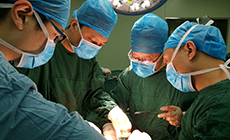
The surgery was performed on August 19. Severe adhesions were found beneath the patient’s previous abdominal incision and around the gallbladder fossa. The surgical team first meticulously separated the intra-abdominal and perihepatic adhesions to clear the field for subsequent procedures. A total hepatic inflow occlusion band was then pre-positioned at the first hepatic hilum to prepare for intraoperative hemostasis. For the three metastatic tumors located in hepatic segments S4b, S5, and S6, Professor Li Yu applied a magnetic traction device to achieve precise retraction of the liver, giving full exposure to the previously hidden lesions. Using a 1-cm margin outside the lesion as a safety boundary, the hepatic tissue was gradually transected with an ultrasonic scalpel. During the procedure, the team prioritized hepatic function preservation, effectively minimizing ischemic injury to the liver throughout the operation and ensuring complete hemostasis in the surgical field. The surgery lasted 3 hours and 15 minutes. Intraoperative blood loss was minimal, no transfusion was required, and the resection margins of all three specimens were negative, thus achieving the goal of radical resection.

Given Mr. Yang’s preoperative history of severe COPD with carbon dioxide retention, he was immediately transferred to the AICU after the surgery for respiratory function monitoring and targeted recovery care. After his condition stabilized, Mr. Yang was transferred back to the Department of Hepatobiliary Surgery, where Head Nurse Tian Boyan led the nursing team in providing targeted professional care and assisting him with early mobilization. The patient’s recovery progressed as expected, and he has now been successfully discharged.
Professor Li Yu stated that magnetic-assisted laparoscopic complex hepatectomy offers a superior surgical option for patients with hepatobiliary diseases, particularly those with underlying comorbidities.