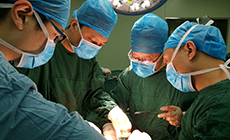
On May 14, the team led by Professor Yuan Zuyi from the Cardiovascular Hospital of the First Affiliated Hospital (FAH) of Xi’an Jiaotong University (XJTU) successfully completed Northwest China’s first interventional procedure for a high-risk complex left main-left anterior descending artery-diagonal branch bifurcation lesion using a domestically developed vascular interventional surgical robot. The procedure marks a major breakthrough for the FAH in intelligent, minimally invasive cardiovascular diagnosis and treatment, and opens a new paradigm of robot-assisted precision intervention for complex, high-risk coronary lesions.
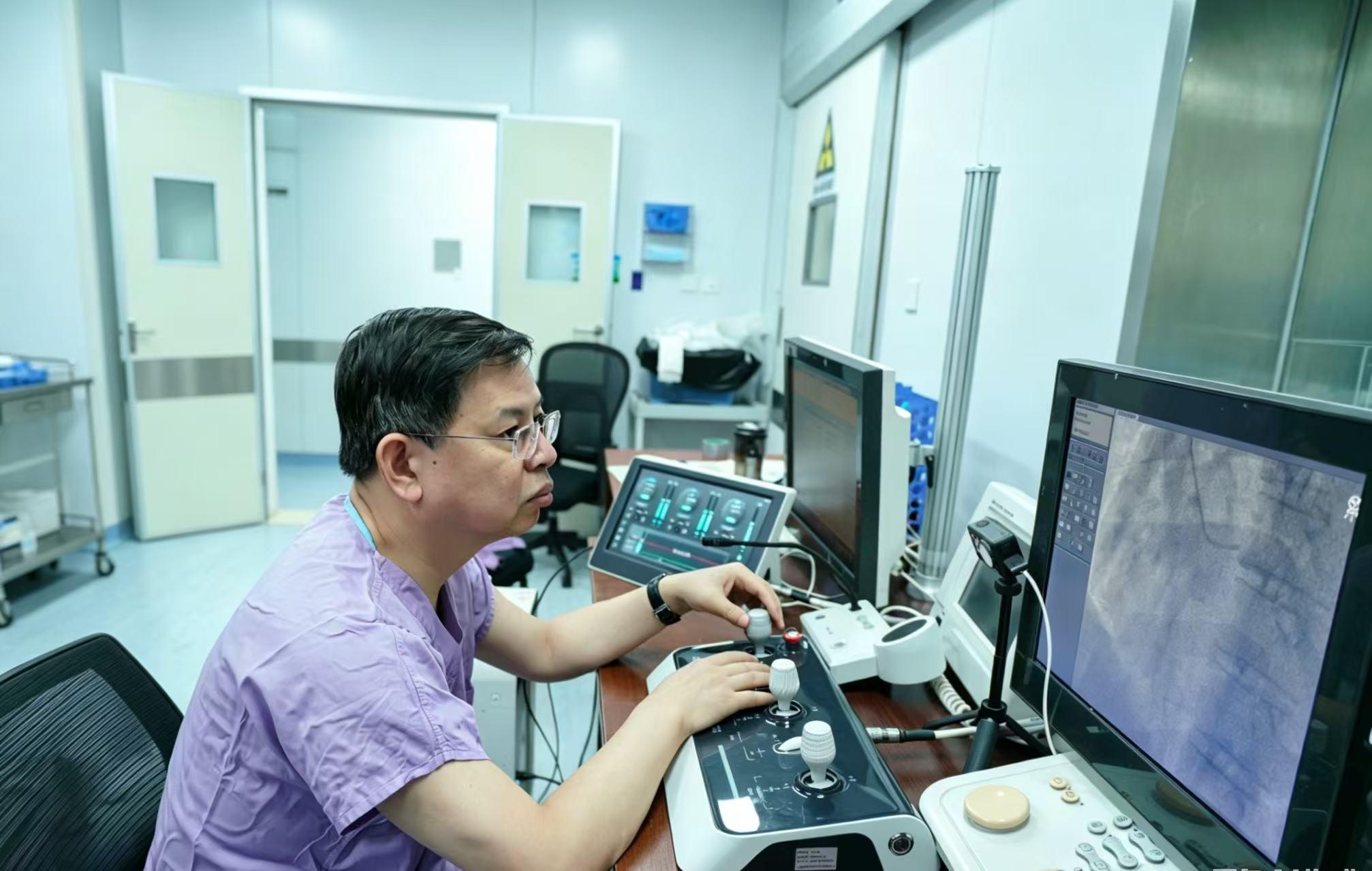
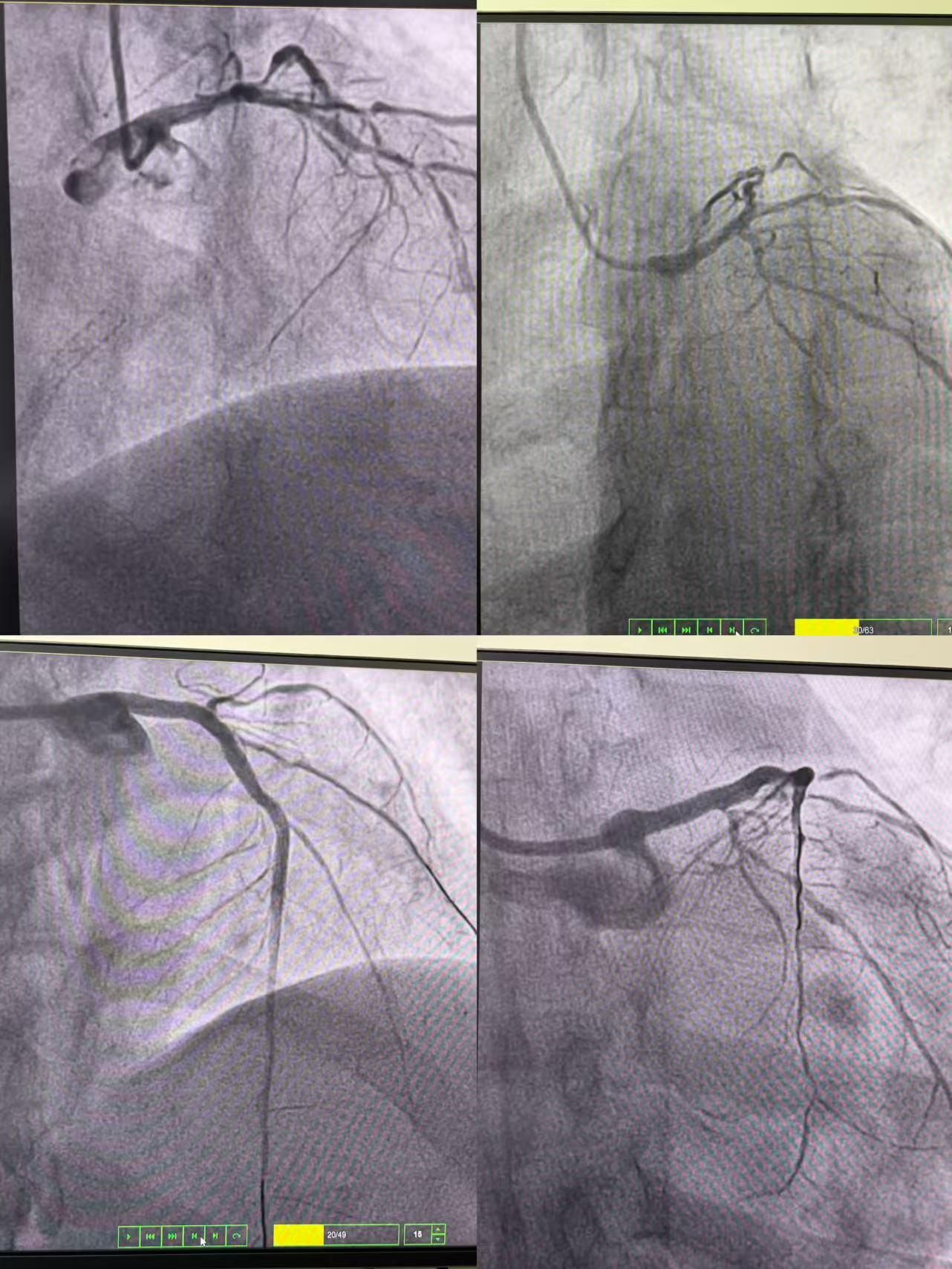
The case was highly complex and high-risk. The patient had significantly reduced cardiac function and severe stenosis involving the left main coronary artery, left anterior descending artery, and diagonal branch, constituting a true high-risk bifurcation lesion. The lesion involved a critical blood supply area of the heart, with complex vascular anatomy and challenging angulation. Conventional manual PCI would have been technically difficult, with a high risk of radiation exposure for medical staff and a high incidence of postoperative complications, making clinical treatment extremely challenging.
In view of the patient’s high-risk condition and complex lesion characteristics, the team led by Professor Yuan Zuyi and Professor Liu Ping conducted a multidisciplinary discussion before the procedure and developed an individualized treatment plan integrating robot-assisted intervention, dual guidewire protection, precise stent implantation, and IVUS optimization. The procedure was performed using a domestically developed vascular interventional robot in a separate-compartment remote-control mode. Supported by submillimeter-level control precision, Artificial intelligence (AI) navigation, and force-feedback sensing technology, the operator performed the procedure remotely from a lead-shielded control room without wearing heavy lead protective clothing, thereby avoiding X-ray radiation injury at the source.
During the procedure, the robot precisely completed key steps such as catheter cannulation, guidewire delivery, and balloon predilation. The side-branch protection strategy was effectively implemented, reducing the risks of vascular dissection and occlusion. A drug-eluting stent was then accurately implanted, with zero positional displacement and complete lesion coverage. Postoperative IVUS evaluation showed good stent apposition and expansion, with no residual stenosis or dissection. Coronary blood flow reached an ideal grade, and no conversion to manual operation was required throughout the procedure.
The success of this procedure represents the first successful application of a domestically developed interventional robot in high-risk complex coronary bifurcation lesions in Northwest China. By using domestic intelligent interventional equipment, the FAH has not only helped prevent occupational radiation injury to operators, but also improved procedural standardization through high-precision operation, reduced the risks associated with complex lesion intervention, and optimized patient prognosis. This achievement provides a safer and more efficient minimally invasive treatment option for patients with high-risk coronary heart disease in the region.