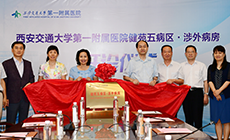
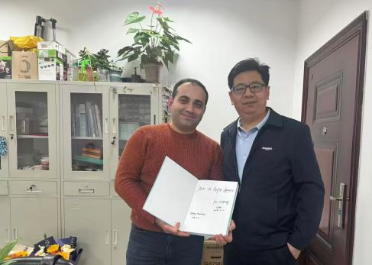
Last month, Land Port Division of the First Affiliated Hospital (FAH) of Xi'an Jiaotong University (XJTU) welcomed an international physician, Rafiq Agasiyev, a general surgeon from Leyla Medical Center (Referans Medical Group) in Azerbaijan. He first learned about magnetic surgery technologies from his mentor, Professor Kenan Yusif - zade, and was deeply impressed by the technologies developed by the magnetic surgery team of the Department of Hepatobiliary Surgery at the FAH. Therefore, he decisively applied for advanced training at the FAH. Below are his reflections on the training experience:
I am Rafiq Agasiyev, a general surgeon from Leyla Medical Center (Referans Medical Group) in Azerbaijan. I first learned about magnetic surgery technologies through an introduction by my mentor, Professor Kenan Yusif-zade. Professor Kenan’s initial contact with the Chinese magnetic surgery team occurred at the International Surgical Week (ISW) conference held in Kuala Lumpur, Malaysia, in August 2024. During the conference, he happened to attend an oral presentation by Dr. Zhang Miaomiao from the magnetic surgery team of the Department of Hepatobiliary Surgery at the First Affiliated Hospital (FAH)of Xi’an Jiaotong University (XJTU), entitled “Treatment of Refractory Esophageal Stenosis after Endoscopic Submucosal Dissection with Magnetic Compression Anastomosis”. The presentation left Professor Kenan deeply impressed. Drawing on many years of clinical surgical experience, he expressed his heartfelt amazement: that this condition could be treated in such a way, and that magnetic surgery technology in the hands of Chinese surgeons had reached such an extraordinary level. After the conference, Professor Kenan gained a comprehensive understanding of magnetic surgery technology and engaged in in-depth discussions with Dr. Yan Xiaopeng.


After returning to his home country, Professor Kenan immediately introduced to us the magnetic surgery technologies he had learned about from Chinese doctors: magnetic anchoring laparoscopic technology, magnetic recanalization for gastrointestinal stenosis, magnetic tracing for marking tiny gastrointestinal tumors, among others. Many of these original techniques were the first time I had ever heard of them, which sparked great interest in me. I promptly submitted an application to my hospital to pursue advanced training in magnetic surgery technologies at the FAH of XJTU. With repeated communication and coordination by Professor Kenan and Dr. Yan Xiaopeng, I ultimately secured this invaluable opportunity to come to China to study magnetic surgery technologies.
On March 2, after a 45-minute metro ride, I arrived at the Department of Special Surgery of the Land Port Division with great excitement. As soon as I entered the ward, I was captivated by the corridor display boards featuring classic clinical cases of magnetic surgery. Seeing how patients with extremely challenging conditions had achieved favorable outcomes through magnetic surgery technologies, I knew I had come to the right place.
Subsequently, Dr. Yan Xiaopeng introduced me to the physicians and nurses in the department. After a brief exchange of greetings, they returned to their clinical duties. Dr. Yan then showed me his “treasure cabinet”, filled with magnets of various shapes and purposes. In that moment, I felt as if I had discovered hidden treasure deep in the mountains. At the same time, I came to a profound realization that these magnetic surgery technologies represented the crystallization of years of dedicated work by the magnetic surgery team led by Professor Lyu Yi at the FAH of XJTU, which filled me with deep respect. When I received the book Clinical Practice of Magnetic Surgery as a gift from Dr. Yan, I could not read the Chinese text, yet the surgical photographs that immediately caught my eye made it clear that this was a renowned seminal work in magnetic surgery and one well worth careful study and reflection. With the assistance of translation software, I spent two weeks learning the 55 classic magnetic surgery cases presented in the book, which left a lasting impression on me.

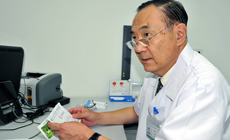
On the morning of March 12, shortly after I arrived at the ward, Dr. Yan Xiaopeng hurriedly handed me several reports from gastroscopy and esophagography. At the same time, I noticed an extremely frail elderly man sitting on a stool nearby, and I immediately realized that this was another complex patient who had come in search of magnetic surgery technologies. The patient had developed severe stenosis at the esophagojejunal anastomosis after surgery for a malignant tumor of the gastric cardia and fundus. Balloon dilation performed under endoscopy at another hospital had been ineffective. For nearly three months, he had been unable to eat or drink, and he carried a paper cup with him at all times, as the severe esophageal stenosis prevented him from even swallowing his saliva. The treatment of this patient would be exceptionally complex and high-risk, and for a moment I did not know where to begin. I slowly looked up at Dr. Yan’s slightly furrowed brow, and the firm, deep gaze in his eyes made me realize that there was still hope for this patient.
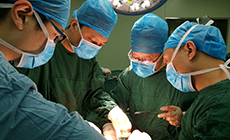
During my advanced training, it was a great honor for me to personally witness magnetic surgery technologies being used to manage complex clinical conditions. In the days that followed, Dr. Yan guided me as we completed further esophagography and gastroscopy for the patient. Ultimately, we performed magnetic recanalization of the stenosed esophagojejunal anastomosis via laparotomy combined with gastroscopy on March 18. This procedure required the joint participation of physicians from multiple departments and specialties. In addition to Dr. Yan Xiaopeng, Dr. Shi Jianhua, Dr. Wang Rongfeng, and Dr. Zhang Miaomiao from the magnetic surgery team of the Department of Hepatobiliary Surgery, the team also included Dr. Zhang Lei and Dr. Lu Qiang from the Department of Abdominal Surgery; Dr. Ren Xiaoyang and Nurse Liu Xin from the Department of Digestive Endoscopy; Dr. Bi Yang, Nurse Liu Yang, and Nurse Lin Xiaowei from the Department of Anesthesiology and Perioperative Medicine; as well as intraoperative imaging staff from the Department of Radiology (I requested this list of participants from Dr. Yan afterwards, because I hoped to remember them). A procedure that required the coordination of so many healthcare professionals and departments proceeded calmly and in an orderly manner under Dr. Yan’s coordination and leadership. I believe this level of coordination reflected the tacit teamwork they had refined through many magnetic surgery procedures. At the same time, I was deeply moved by the noble qualities of the physicians at the FAH of XJTU, who never hesitated in the face of complexity or difficulty and remained devoted to saving patients.

On March 30 (12 days after the operation), while riding the metro to the FAH, I kept thinking about when the magnets should be removed and how they could be retrieved. During the morning handover, Dr. Yan Xiaopeng excitedly told me that the patient said he was already able to swallow his saliva. We then asked the patient to drink water in large gulps, and he was able to swallow it smoothly as well. Dr. Yan immediately arranged for me to accompany the patient to the gastrointestinal contrast imaging suite. Watching the contrast agent the patient drank pass smoothly into the jejunum, I felt intensely excited. What happened next, however, completely astonished me. Under X-ray guidance, Dr. Yan gently and steadily pulled on the magnetic traction tube within the patient’s nostril. On the fluoroscopic image, the two magnets could be seen slowly moving from the esophagojejunal anastomosis into the patient’s oral cavity, and they were then successfully retrieved. Subsequent gastroscopy and esophagography further confirmed recanalization of the esophagojejunal anastomosis. The patient was already able to resume oral intake later that day. An elderly man who had not been able to eat or drink by mouth for three months was now able to eat meatballs (they told me this was a Chinese dish called “Shizitou”). At that moment, I truly felt the remarkable power of magnetic surgery technologies.

Today, the patient looked rejuvenated, a completely different person from the frail and listless state he was in at admission. Before leaving the FAH, the patient and his family, warm and gracious, presented us with a commemorative silk banner. A nurse quietly told me that in China, this is regarded as the highest form of respect and gratitude that patients can offer to the healthcare professionals who have helped them. I was genuinely surprised to see my name on the banner, and I could not help wondering whether I had already become part of the magnetic surgery team. I feel truly honored to have been involved in the patient’s care from beginning to end, and to have witnessed firsthand the remarkable power of magnetic surgery and the excellence of Chinese doctors. After returning home, I will share the story of the magnetic surgery team at the FAH of XJTU with my colleagues, and I hope that our country will also be able to carry out magnetic surgery procedures of this kind.