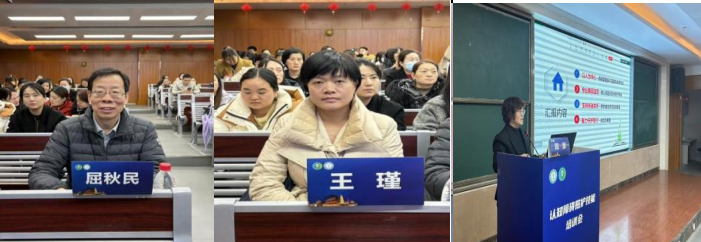
On March 14, the Cognitive Impairment Care Skills Training Meeting for Northwestern China, hosted by the Shaanxi Province Health Care Association and organized by the First Affiliated Hospital (FAH) of Xi’an Jiaotong University (XJTU), concluded successfully in Xi’an. Nearly 160 professionals from within and outside the province attended the meeting. Multiple authoritative experts from across China gathered to deliver lectures, providing a high-quality platform for academic exchanges and skills advancement.

The meeting was chaired by Head Nurse Qu Yan from the Department of Neurology at the FAH of XJTU. Professor Qu Qiumin, Director of the Northwestern Cognitive Institute and academic leader of the Department of Neurology at the FAH, delivered the opening remarks. He noted that, against the backdrop of population aging, enhancing care capabilities for cognitive impairment is an urgent clinical need, and emphasized that care should combine professional skills with humanistic warmth. Going forward, the Northwestern Cognitive Institute will continue to promote the professionalization and standardization of regional care services.
During the training, experts from both within and outside the province, such as Wang Zhiwen from Peking University School of Nursing and Chang Hong from Xuanwu Hospital, Capital Medical University, systematically shared on key topics such as non-pharmacological management of cognitive impairment-related agitation behaviors, the integration of policies and technology in care, clinical presentation and diagnosis, and comprehensive management strategies. They also covered practical topics such as handling special care situations and patient communication skills. The course balanced theoretical depth with practical value.
In the afternoon, participants visited the Pengruili Zhizhi Care Home in Xi’an, deepening the integration of theory and practice. At the close of the meeting, Professor Qu Qiumin awarded training certificates to the participants and provided a summary.
This training meeting has injected new momentum into the practice of cognitive impairment care, effectively enhancing the skills of regional care specialists and contributing professional expertise to advancing the “Healthy China 2030” strategic goals.