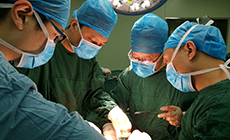
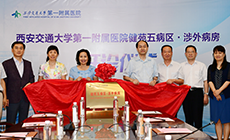
Recently, the ultra-minimally invasive endoscopic diagnosis and treatment subspecialty team of the Department of Gastroenterology of the First Affiliated Hospital (FAH) of Xi’an Jiaotong University (XJTU) achieved another technical milestone by successfully performing endoscopic balloon dilation for esophageal stricture in a 2-month-old infant who had undergone surgery for congenital esophageal atresia. The procedure helped restore esophageal function and enabled normal oral intake, representing another key breakthrough by the team in pediatric gastrointestinal endoscopy.
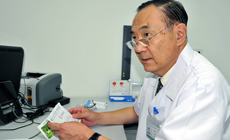
The pediatric gastrointestinal tract is narrow and fragile, and endoscopic procedures place stringent demands on precision and stability, often described as the “Mount Everest” of endoscopic diagnosis and treatment. The infant had previously undergone laparoscopic magnetic compression anastomosis therapy for esophageal atresia reconstruction, performed by Director Cao Zhenjie’s team in the Department of Pediatric Surgery, but developed postoperative esophageal stricture. Given the extremely young age and a surgical field limited to the millimeter scale, conventional dilation carried a very high risk. Under the professional guidance of Director He Shuixiang, Deputy Director Ren Mudan of the Department of Gastroenterology served as the primary surgeon and, together with the Department of Pediatric Surgery and Professor Wang Chunshu’s team from the Department of Anesthesiology, carried out a multidisciplinary collaboration to complete balloon dilation through precise endoscopic manipulation, achieving minimally invasive improvement of esophageal patency with no complications throughout the procedure.
This breakthrough is built on the team’s strong technical foundation. Previously, Deputy Director Ren Mudan, with the support of Head Nurse Zhao Qian, successfully carried out bedside neonatal feeding tube placement. With real-time guidance using an ultrathin endoscope, the team achieved precise bedside operation and avoided transport-related risks. The team also masters core techniques including precise endoscopic hemostasis for neonatal gastrointestinal bleeding and minimally invasive endoscopic removal of gastrointestinal foreign bodies in infants and young children. These procedures are centered on ultrathin endoscopy and follow the principle of “minimally invasive priority, safety first”, enabling millimeter-level precision.
The successful diagnosis and treatment marks the FAH’s entry into the national advanced tier in minimally invasive diagnosis and treatment for complex gastrointestinal diseases in very young pediatric patients.