Recently, Director Yin Zhanhai’s research group from the Department of Orthopedics of the First Affiliated Hospital (FAH) of Xi’an Jiaotong University (XJTU) achieved new progress in rotator cuff repair. Focusing on two core issues of high clinical concern, including differences in repair outcomes of rotator cuff injuries in patients with obesity and optimization of postoperative immobilization management, the group’s two studies have been consecutively accepted for publication by The American Journal of Sports Medicine (AJSM), an internationally recognized authoritative journal in sports medicine (CAS Q1, JCR Q1). This fully demonstrates the group’s solid foundation and sustained research output in basic and translational studies on rotator cuff repair.

Postoperative immobilization is a routine protective measure after rotator cuff injury repair, yet it may trigger a series of problems such as tissue degeneration, scar formation, and restricted functional recovery. In the first study conducted by the research group, an electrical stimulation intervention was innovatively introduced in a rat model of rotator cuff repair with immobilization, and its effects in improving immobilization-related adverse outcomes were systematically evaluated. The findings provide a novel translational research lead for achieving the clinical aim of reducing the biological cost caused by immobilization while ensuring the safety of the repaired structure, and also lay a solid foundation for subsequent in-depth elucidation of the relevant mechanisms and optimization of clinical intervention protocols. Both MRI and immunofluorescence staining results confirmed that electrical stimulation can effectively offset various adverse effects induced by postoperative immobilization after rotator cuff repair.
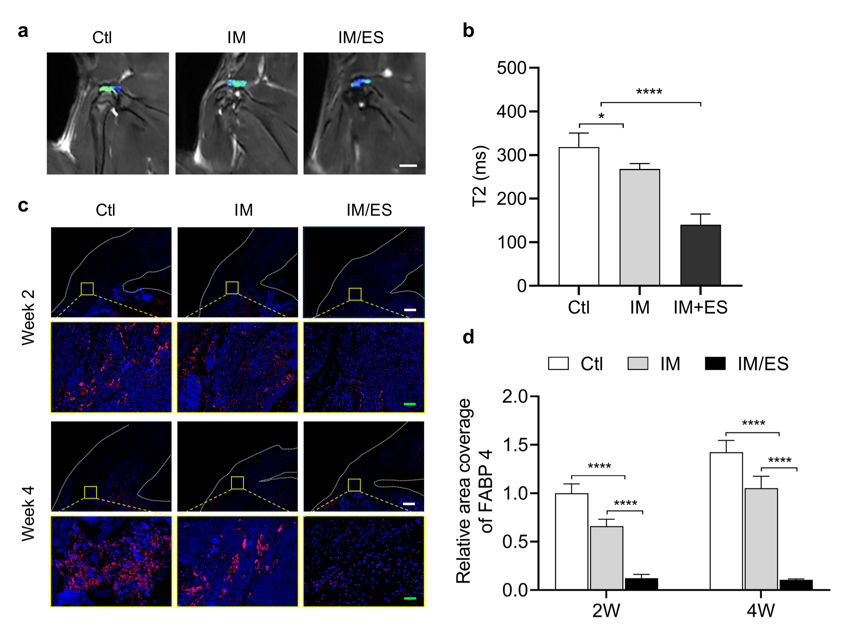
MRI and immunofluorescence staining indicated that electrical stimulation offset immobilization-related adverse effects after rotator cuff repair
The second study, based on a rat model of rotator cuff injury, comprehensively evaluated the impact of delayed repair on tendon to bone healing outcomes under different metabolic states. The study clearly indicated that, in the setting of obesity, the negative impact of delayed repair on healing at the tendon to bone interface was more pronounced. This conclusion provides more targeted experimental evidence and a testable scientific hypothesis for clinical risk stratification in patients with obesity and rotator cuff injury, precise assessment of surgical timing, and scientific perioperative management.
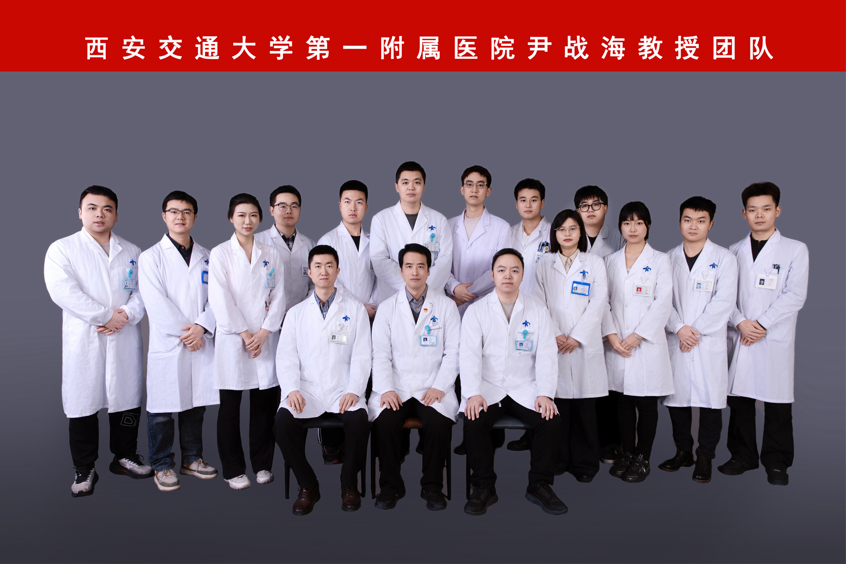
For the first study, the first authors were doctoral graduate student Xu Meiguang and master’s graduate student Li Bingyan from the Department of Orthopedics of the FAH. For the second study, the first authors were doctoral graduate students Wu Yukuan and Liu Qiaonan from the Department of Orthopedics. Director Yin Zhanhai served as the corresponding author for both studies, and Assistant Researcher Bai Lang served as a co-corresponding author. Next, Director Yin Zhanhai’s team will remain focused on key challenges in clinical diagnosis and treatment, further strengthen the deep integration of basic research with clinical translational validation, and continue to advance the in-depth exploration of key scientific questions in sports medicine, thereby injecting strong momentum into the FAH’s high-quality development and high-level medical scientific and technological innovation.