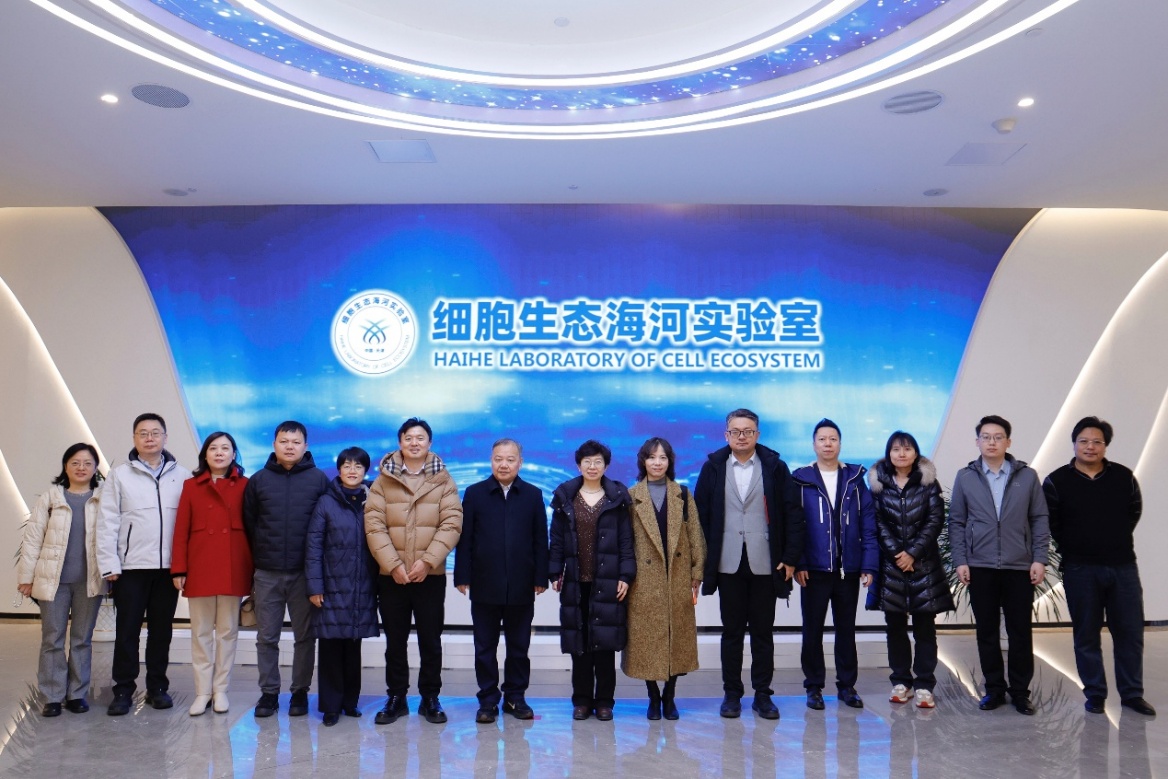
On January 16, 2026, Professor Han Suxia, Vice President of the First Affiliated Hospital (FAH) of Xi’an Jiaotong University (XJTU), led a delegation to the Institute of Hematology and Blood Diseases Hospital, Chinese Academy of Medical Sciences, for a special study visit, aiming to address challenges in building a cell therapy center and to promote high-quality development in this field at the FAH.
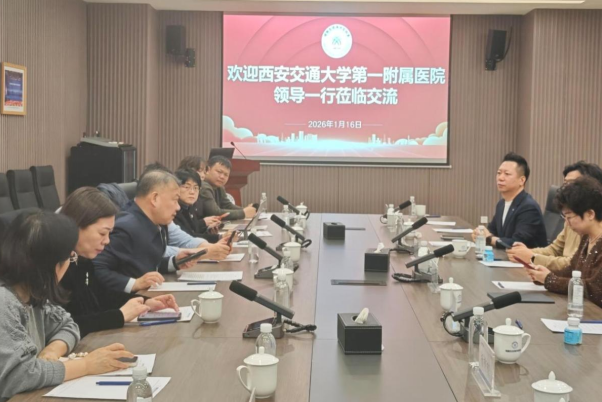
The study delegation comprised core members from multiple departments, such as the Cell Therapy Center, the Department of Hematology, and the Center for Research Management. As an institution that has completed national registration for both its clinical cell-therapy research institution and related projects, the FAH of XJTU focused this visit on key areas such as platform development, scientific innovation, and translational outcomes, benchmarking precisely against industry leaders.
The first site visit was to the Haihe Laboratory of Cell Ecosystem, China’s first new R&D institution dedicated to cell-ecosystem biomedicine. Through on-site tours of the exhibition hall, GMP-compliant immune cell manufacturing facility, and incubation platform, the team gained a detailed understanding of the laboratory’s development philosophy, equipment configuration, quality management system, and start-up incubation mechanisms, thereby accumulating valuable experience for translating the FAH’s research outcomes into real-world applications.
At the symposium, relevant leaders from the Institute of Hematology and Blood Diseases Hospital, Chinese Academy of Medical Sciences, introduced the laboratory’s organizational structure, research priorities, and operational model. Vice President Han Suxia outlined the overall development of the FAH of XJTU, progress in building the National Medical Center, and plans for establishing the Cell Therapy Center. She underscored the strategic value of cell therapy as a frontier field in biomedicine and expressed a vision for long-term collaboration to jointly advance the field.
On the afternoon of January 16, the team visited the Institute of Hematology and Blood Diseases Hospital, Chinese Academy of Medical Sciences, at the Tuanbo Division, where they toured the GMP laboratory and cell therapy ward. They observed the full operational processes, quality control standards, and infection control measures in the cell therapy ward. The team engaged in in-depth discussions with technicians on key technologies and patient treatment protocols, gaining a more intuitive understanding of clinical applications.
On January 18, the team was invited to attend the “Symposium on Clinical Research and Clinical Translation Applications of Biomedical New Technologies”, where they, along with experts from the clinical, research, regulatory, and industry fields, explored innovative pathways and regional collaborative development in the diagnosis and treatment of hematologic diseases as well as in gene and cell therapies.