Recently, the Department of Pediatrics at the Land Port Division of the First Affiliated Hospital (FAH) of Xi’an Jiaotong University (XJTU) successfully treated a critically ill 13-month-old child with Niemann-Pick disease type A, demonstrating the FAH’s outstanding capabilities in the diagnosis and treatment of rare pediatric diseases.
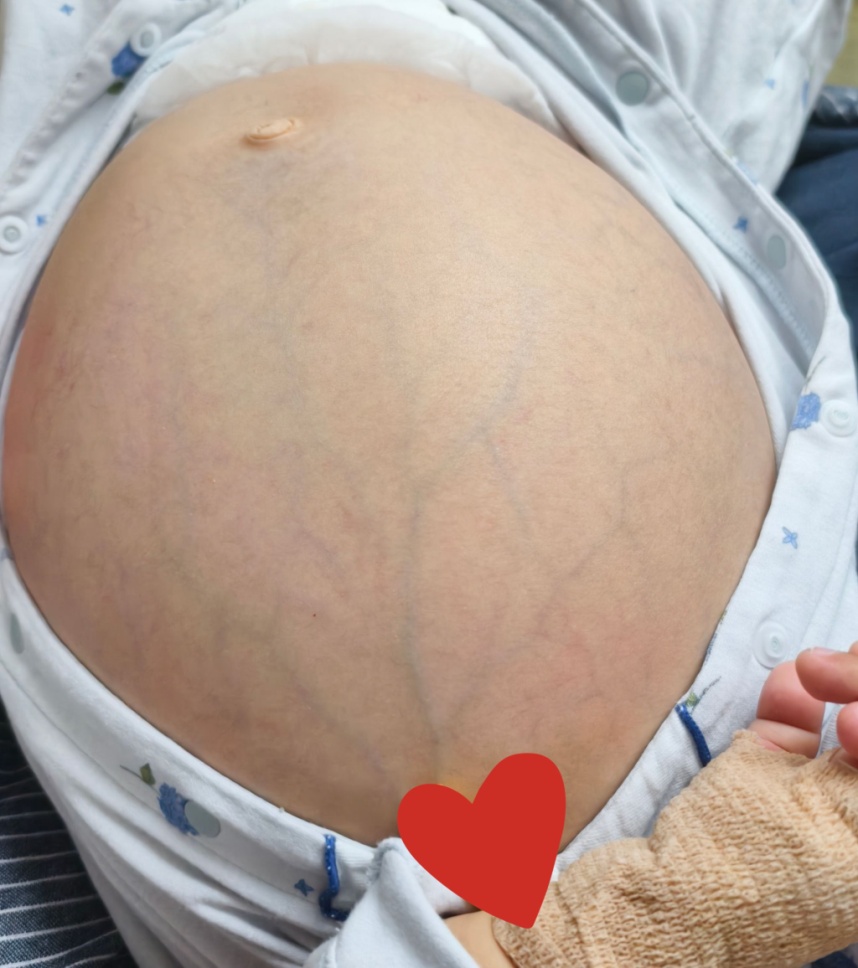
The child had developed hepatosplenomegaly and a yellowish complexion at 10 months of age. Bone marrow aspiration and genetic testing performed at another hospital confirmed a diagnosis of Niemann-Pick disease type A, a rare inherited disease with an extremely poor prognosis for which conventional drug treatment is ineffective. One week before admission, the child developed critical manifestations including diarrhea, vomiting with blood streaks, abdominal wall rigidity, and ecchymoses on the lower limbs, and the child’s condition continued to deteriorate.
On admission, the child’s vital signs were extremely unstable, with tachypnea, scleral icterus, an abdominal circumference of 61 cm, and hepatosplenomegaly extending to the iliac fossae. The child also presented with massive ascites, severe hepatosplenomegaly, hypoproteinemia, pancytopenia, and coagulation dysfunction, indicating an extremely high risk of bleeding.
Associate Chief Physician Yang Yonghua, Attending Physician He Min, and Chief Resident Physician He Xinyu formed a diagnosis and treatment team, promptly assessed the child’s condition, and initiated emergency treatment. The team implemented an individualized treatment plan with precision, including plasma transfusion to correct coagulopathy, albumin combined with diuretics to reduce ascites, and fluid replacement to maintain homeostasis. Under close monitoring, the team carefully adjusted the treatment strategy. After intensive treatment, the child’s ascites subsided, breathing became stable, and both symptoms and laboratory indicators improved significantly. The child was successfully stabilized and recovered from the critical condition.
Niemann-Pick disease type A is an autosomal recessive inherited disease that begins in infancy and involves multiple systems. At present, there is no specific curative treatment. This successful treatment marks a major breakthrough in the comprehensive diagnosis and treatment capabilities of the Department of Pediatrics at the FAH Land Port Division for difficult and rare pediatric diseases. Looking ahead, the department will continue to strengthen its capabilities in the diagnosis and treatment of complex, severe, and rare diseases, safeguarding children’s health with advanced medical skills.