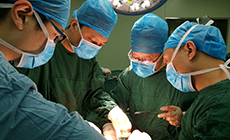
Recently, the PET/CT room of the First Affiliated Hospital (FAH) of Xi’an Jiaotong University (XJTU) successfully implemented two cutting-edge molecular imaging techniques, 18F-Exendin-4 PET/CT and 18F-MK6240 PET/CT, enabling precise localization of insulinoma and visualized assessment of Alzheimer’s disease, respectively. These advances provide strong support for early diagnosis and treatment of complex diseases, and the FAH is among the few institutions in China that routinely carry out such techniques.
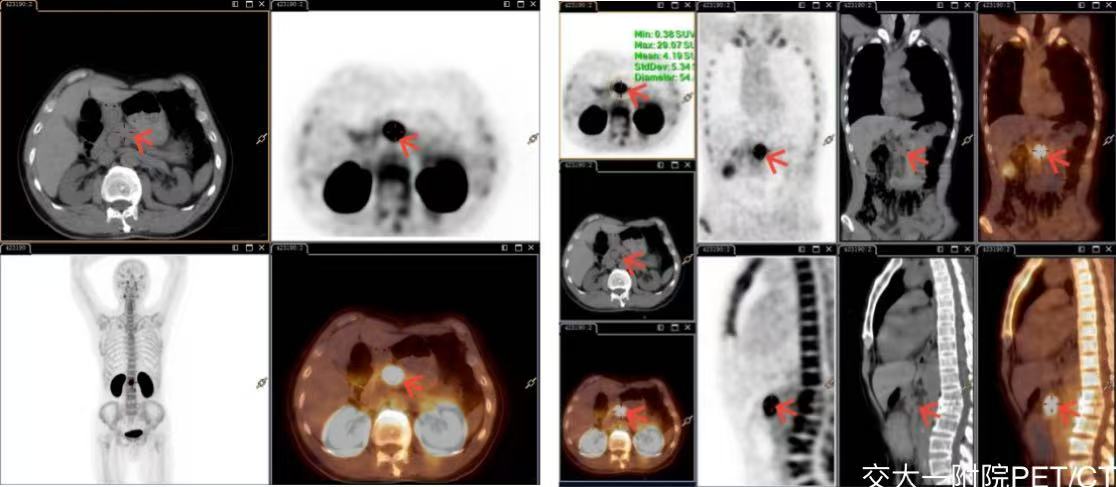
Insulinoma is the most common functional pancreatic neuroendocrine tumor. Approximately 90% are benign, and most measure less than 2 cm in diameter. Conventional imaging modalities can easily miss these small lesions, while accurate preoperative localization is crucial for curative surgery. Focusing on GLP-1 receptor–targeted imaging, the FAH’s PET/CT room has introduced 18 F-Exendin-4 PET/CT, which specifically binds to tumor targets and clearly delineates lesion location, size, and tracer uptake, thereby significantly improving the detection rate and diagnostic accuracy of small insulinomas.
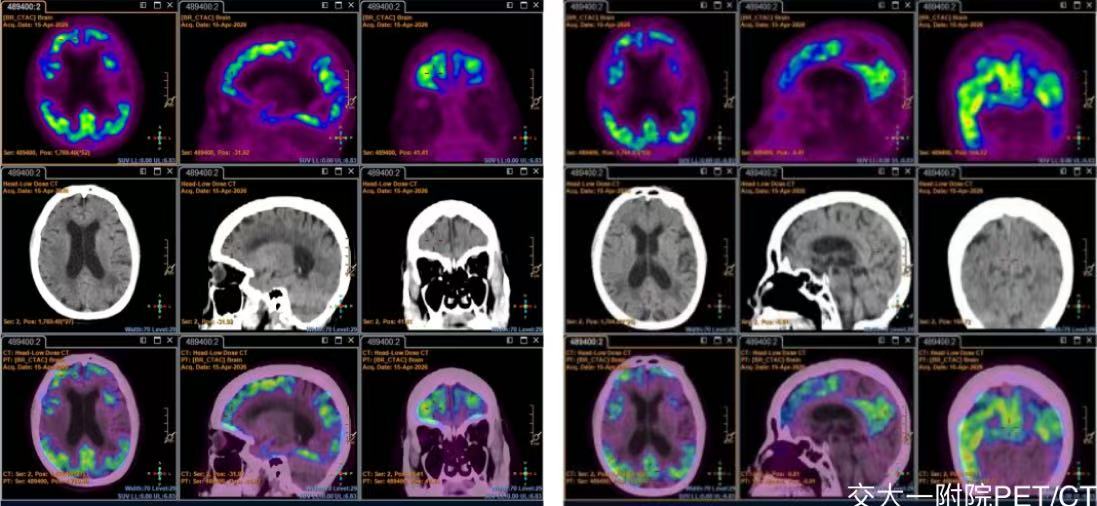
Alzheimer’s disease, the most common type of dementia, has long faced challenges in early diagnosis and ongoing disease evaluation. The Pet/CT room has introduced the second-generation Tau protein imaging agent 18F-MK6240, which precisely delineates the abnormal tau protein distribution in the brain and quantifies the extent of deposition. This technique aligns with international nuclear medicine guidelines and is used for the early diagnosis, differential diagnosis, and disease progression monitoring of Alzheimer’s disease.
Both of these technologies employ specific molecular-targeted imaging, upgrading traditional anatomical imaging to an integrated functional-molecular-pathological diagnostic approach, achieving “clear visibility, accurate localization, and comprehensive assessment.” This advancement fills the gap in precise imaging diagnostics for region-specific diseases. The PET/CT Room of the FAH will continue to advance molecular imaging technology innovations, providing high-precision services to patients and injecting new momentum into the standardized diagnosis and treatment of major, rare, and complex diseases.