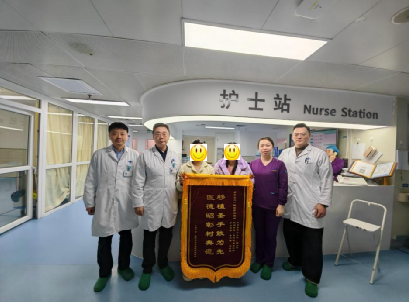
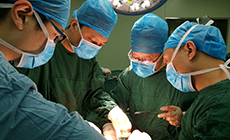
On December 12, 2025, the kidney transplantation team of the First Affiliated Hospital (FAH) of Xi’an Jiaotong University (XJTU) successfully completed the world’s first kidney transplantation using a living-donor horseshoe kidney combined with vascular reconstruction using vessels donated from a deceased donor, achieving a first-ever breakthrough in living-donor horseshoe-kidney transplantation. This procedure brought new hope to patients with end-stage renal disease and also marked a key technical breakthrough by the department in kidney transplantation involving donor kidneys with complex anatomical variations.
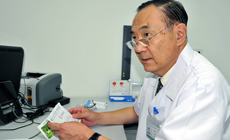
The donated kidney was provided by the patient’s mother. Preoperative evaluation revealed that she had a rare congenital horseshoe kidney malformation, with the lower poles of both kidneys fused and abnormal vascular and ureteral anatomy. Traditionally, this condition is considered a relative contraindication for kidney transplantation, and living donation in such cases entails extremely high surgical difficulty and a high risk of complications. Given the patient’s urgent need for treatment, the donor’s family demonstrated extraordinary courage. Professor Xue Wujun, academic leader of the Department of Kidney Transplantation, and Professor Ding Xiaoming, Director of the department, took the lead in organizing a multidisciplinary team (MDT) discussion. After several weeks of meticulous preparation, the surgical plan was finalized.
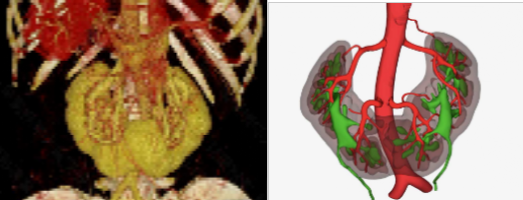
Preoperatively, the team performed a millimeter-level precision assessment using high-resolution CTA and three-dimensional reconstruction to clearly delineate the vascular course and the isthmus. Intraoperatively, under the overall command of Director Ding Xiaoming, the team laparoscopically procured the donor’s left hemikidney and, in combination with vascular reconstruction using vessels donated from a deceased donor, meticulously mobilized the kidney and managed the aberrant vessels using minimally invasive techniques. This approach shortened the donor kidney warm ischemia time and safeguarded residual renal function. After graft trimming and reconstruction, the donor kidney was successfully implanted into the recipient. Upon reperfusion, the transplanted kidney produced urine immediately, indicating good function.
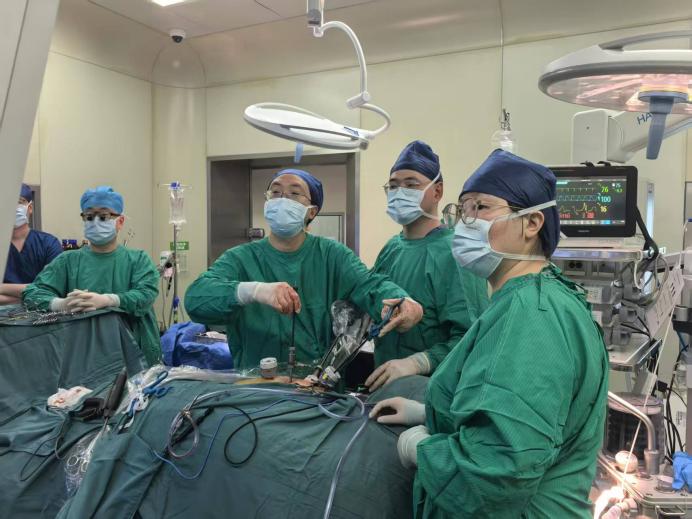
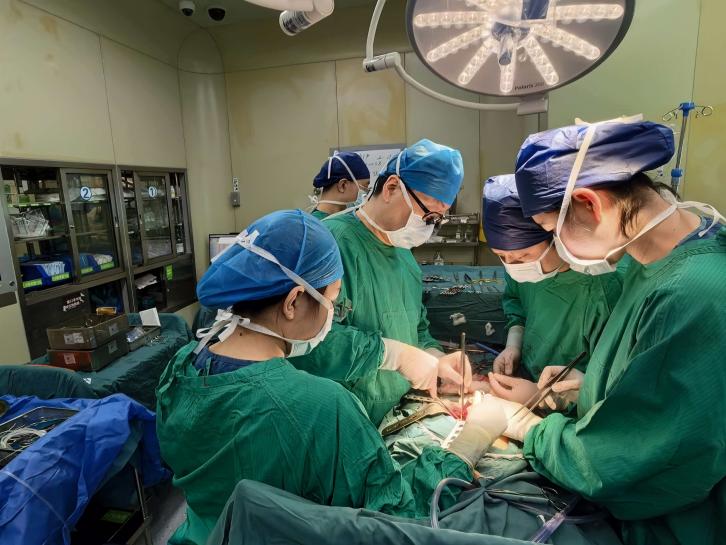
Postoperatively, with meticulous care, the donor maintained normal renal function without complications and was discharged uneventfully. The recipient successfully passed the recovery period, with normal urine output and gradually improving renal function indicators, and was freed from long-term dialysis.
This innovative procedure combines the advantages of minimally invasive surgery and addresses the challenge of short donor renal vessels, further broadening the criteria for living-donor kidney sources and offering new possibilities for potential donors with renal anatomical variations. In recent years, the Department of Kidney Transplantation has routinely performed a range of complex transplant procedures, with the annual transplant volume expected to exceed 500 cases. The success of this operation highlights the department’s technical strength and innovation capacity in complex transplantation, adding new momentum to the advancement of organ transplantation.